Donor Diligence Software
Let good news be the only headline.
Every gift accepted is a bet on who's behind it and every honoree is a name your institution now vouches for. Most of the time, that bet pays off — but trouble doesn’t usually introduce itself.
Quantifind surfaces what traditional screening methods miss: risks like a sanctioned business partner or a shell company hiding behind a clean name. What used to take hours per name now takes minutes, so your team says yes with confidence, and no before it costs you.


14x
faster full-population donor screening
200+
global open-source and commercial data sources
95%
reduction in false positives
100%
auditable, explainable decisions


the problem
Manual review was built for a slower world.
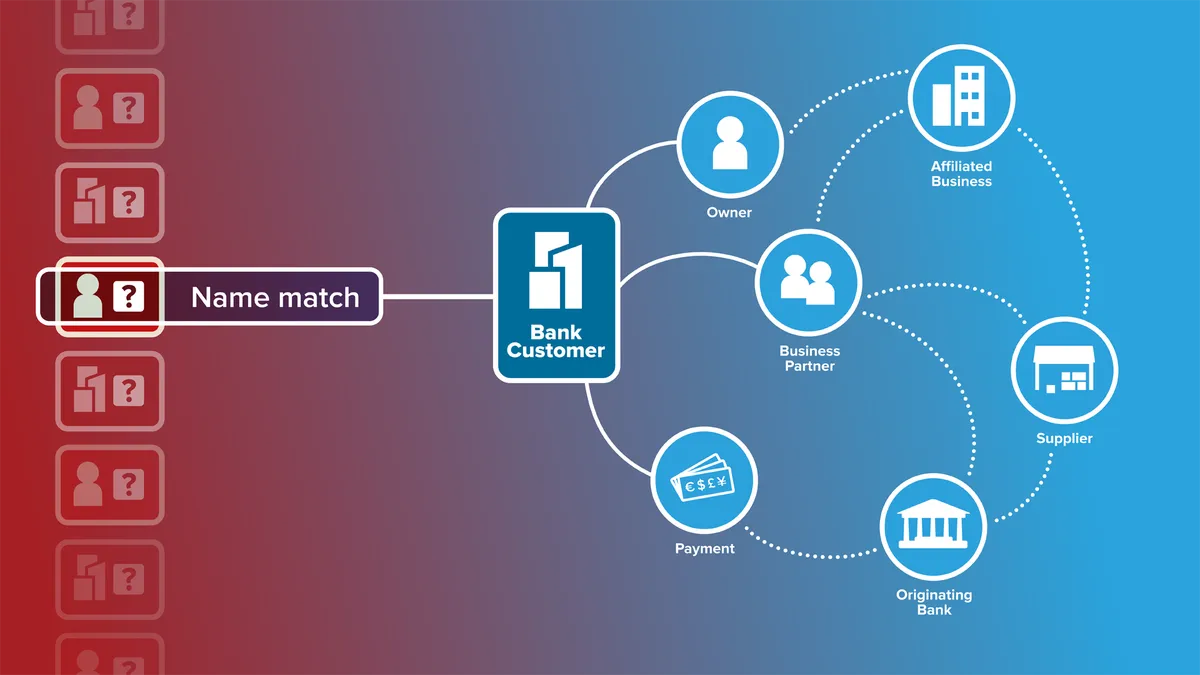
Risk doesn't live in a single name; it hides in networks, aliases, shell companies, and subsidiaries designed to blend in. And a risk profile isn't static. It evolves as owners, investors, and relationships change. One-time screenings and shortlist sampling won't catch that. You have to watch everything.
the fix
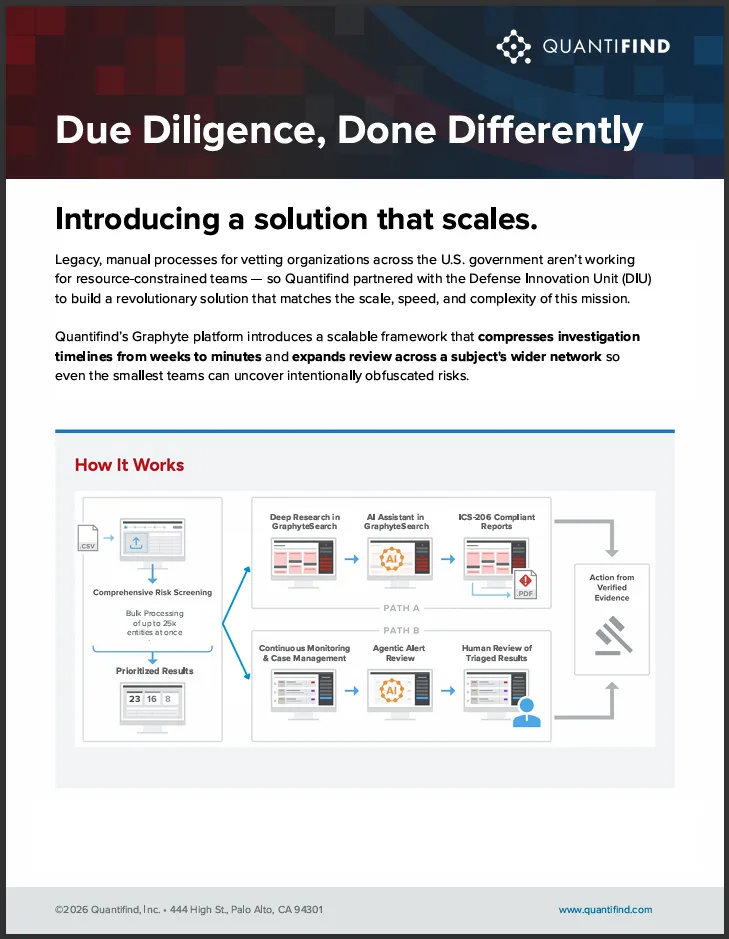
Batch screening with Quantifind enables even small teams to perform thorough, continuous vetting.
The Capability Stack
Six capabilities. One diligence workflow.
Each capability is built in — not a separate product to buy.
Entity Screening
Vendor and subcontractor screening with Name Science™ entity resolution at 95%+ accuracy, run across a full population in batch or in real time for a single award.
Beneficial Ownership & FOCI Risk
Automated network expansion maps ownership, investment, and subcontractor relationships through multiple degrees of separation, surfacing foreign ownership, control, or influence hidden behind shell companies and layers of subcontracting.
Adverse Media & Sanctions Screening
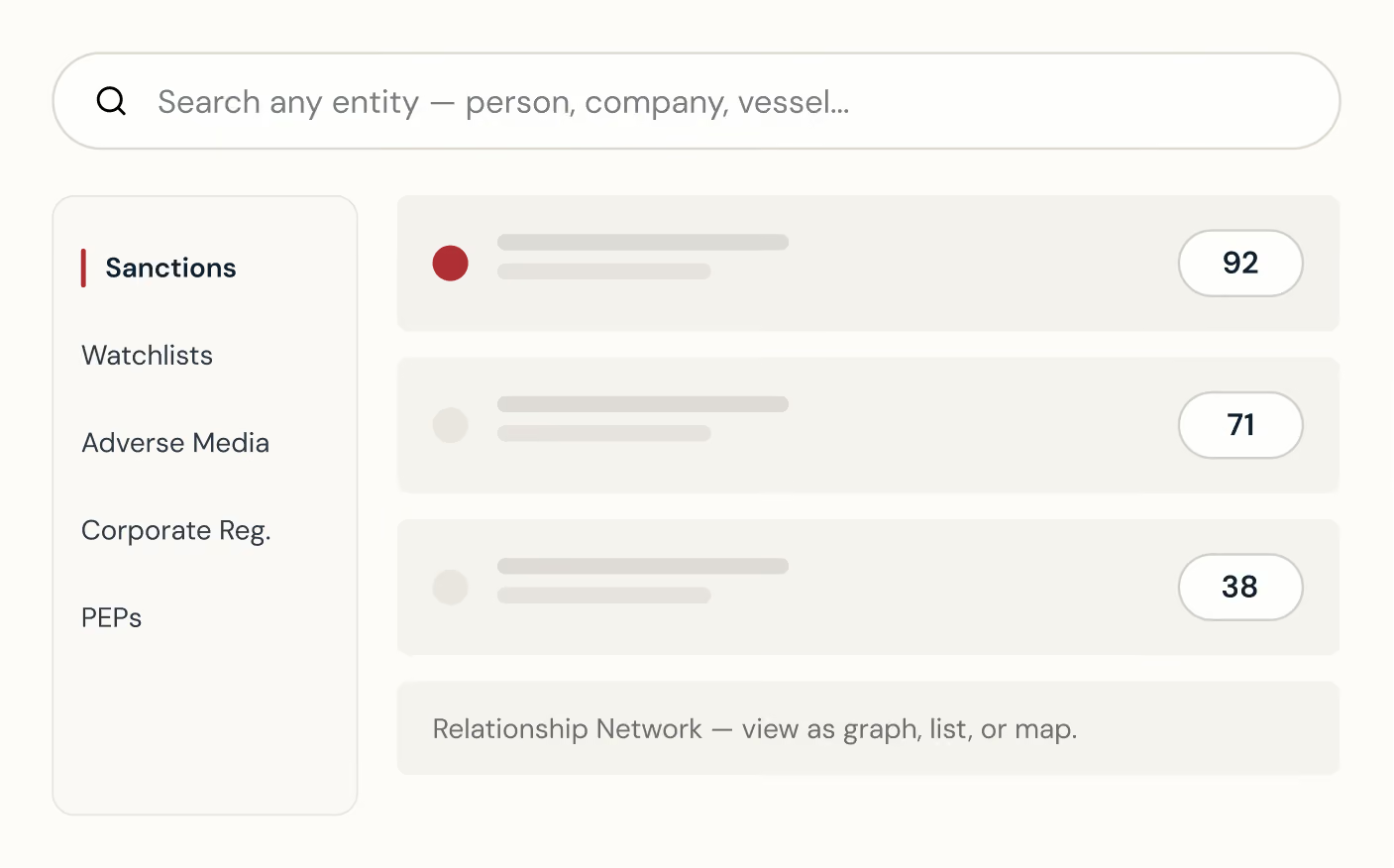
Risk extracted from a deep archive of global news and sanctions lists using dynamic risk typologies, not keyword hits, distinguishing a vendor's principal from an unrelated namesake or a passing mention.
Corporate & Trade Risk
Corporate registries across 130+ jurisdictions and global trade data expose ownership structures and trade-based risk behind a supplier.
Population-Scale Batch Screening
Screen an entire vendor registry, award file, or grantee list at once instead of one record at a time, giving small teams full population coverage during onboarding, recompete, and periodic re-review.
Audit-Ready Case Documentation
Every risk determination carries source evidence, confidence scoring, and a full chain of custody, ready for the acquisition record or an oversight review.
How it works
Start with a name, end with intel.
Start with any entity
Initiate your search with as little as an individual name, organization, address, handle, email, or phone number. Search a single name, a vendor list, award file, or a public-database.
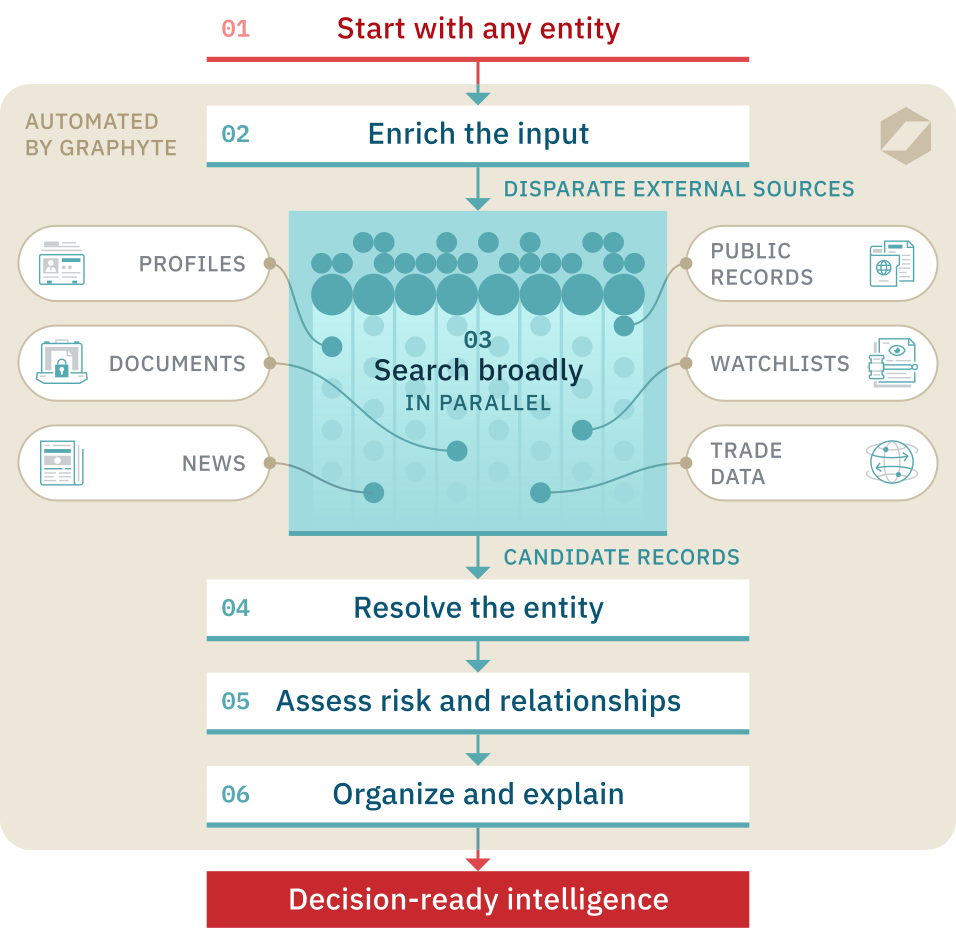
Contextualize and search
Graphyte standardizes the name and location, flags potential data quality issues, and adds linguistic context, expected name variations, and geographic precision, then scans 200+ global structured and unstructured data sources.
Resolve and infer
Name Science™ and proprietary agentic middleware distinguish true matches among messy, multilingual data, then assembles a unified, confidence-scored profile by risk typologies, relationships, and relevance.
Assess and decide
Graphyte aggregates and summarizes the results, organizing findings by risk and confidence with supporting context, source evidence, and provenance. All that's left is deciding what risk you accept, what warrants a closer look, and what happens next.
Continuous Monitoring
Continuous monitoring re-screens a fixed population against new data as it is ingested, replacing one-time checks or periodic re-screening. New risk signals, from a sanctions listing to a change in ownership, surface as they emerge, so you’re never the last to know.
Frequently Asked Questions
Donor vetting software, answered.
What is donor vetting software?
Donor vetting software, also called donor due diligence or gift screening software, screens prospective donors, honorees, board nominees, and vendors for risks a standard background check would miss, such as sanctions exposure, shell company ownership, or adverse media tied to a name that otherwise looks clean. Quantifind's Graphyte platform automates donor due diligence so institutions can accept gifts and name honorees with confidence.
How does donor due diligence work with Quantifind?
Graphyte resolves the true entity behind a name, trust, or LLC, maps the family, business, and affiliate network around them, and flags sanctions exposure, politically exposed status, and adverse media as part of the gift vetting process. Results are ranked by relevance, so a review surfaces the risks that matter instead of every name that happens to match.
Does Quantifind offer continuous monitoring for donor and gift screening?
Yes. A name that clears a one-time gift acceptance review can look different years later as affiliations shift and new information surfaces. Continuous monitoring re-screens donors, honorees, and vendors on an ongoing basis, replacing a single point-in-time check with an evolving donor due diligence record.
How is donor vetting different from a standard background check or a Google search?
A manual background check or prospect research search only finds what's easy to find, and usually only in one language. Graphyte draws on 200+ structured and unstructured data sources, including global sanctions lists, adverse media, and corporate registrations across multiple languages, then resolves entities across aliases and spellings to distinguish a genuine match from a coincidental namesake. The result catches what name-only, single-language screening would miss entirely.
Can donor vetting software also screen board members, vendors, and grant recipients?
Yes. The same due diligence process applies across every relationship an institution takes on, including gift vetting, honoree vetting, board member screening, vendor due diligence, and grant recipient screening, so vetting isn't limited to the moment a gift is accepted.