Risk Typologies · Graphyte Technology
Risk detection that understands context.
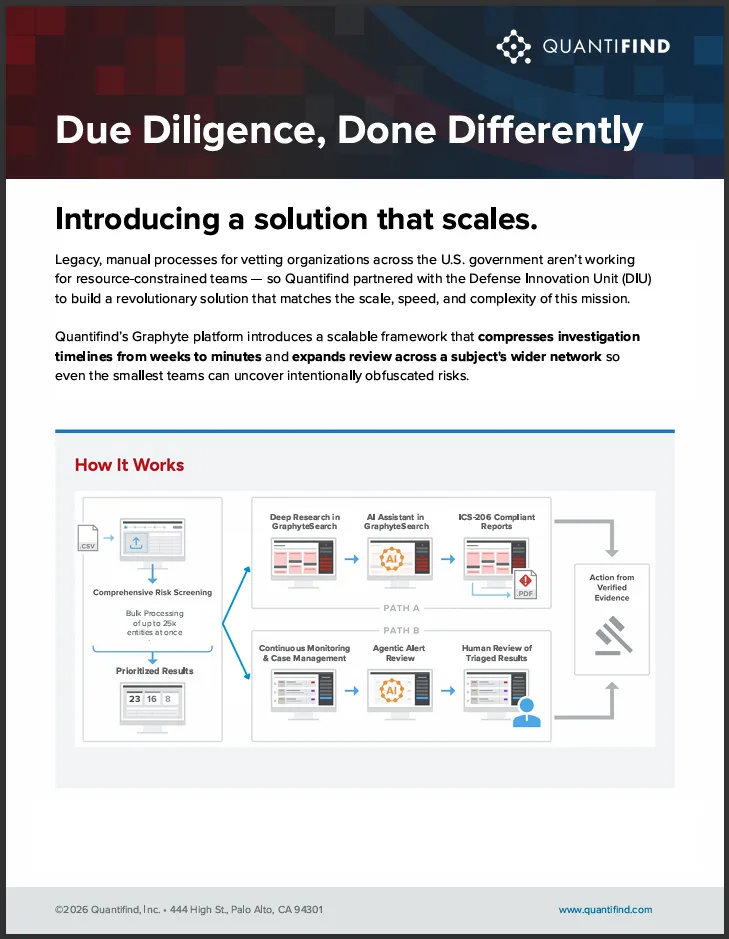
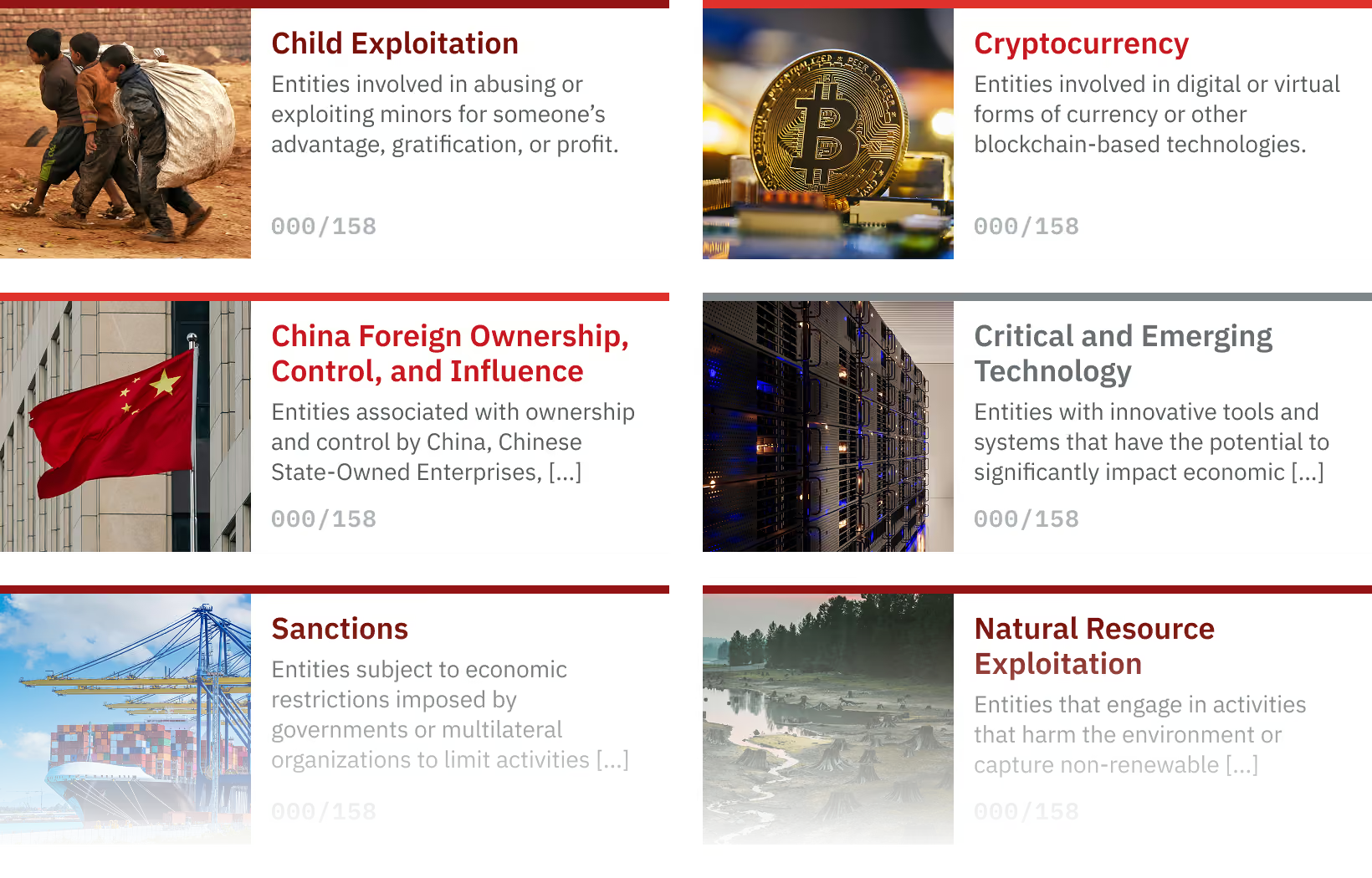
Graphyte™ screens people and organizations against 100+ standardized risk typologies. Each one is defined with domain experts, aligned to regulatory guidance, and delivered with its evidence. Behind them are purpose-built language models, trained on the vocabulary of risk rather than the open web.
100+
standardized risk factors across five risk domains
60+
model-based typologies that read news context, not just keywords
3x3
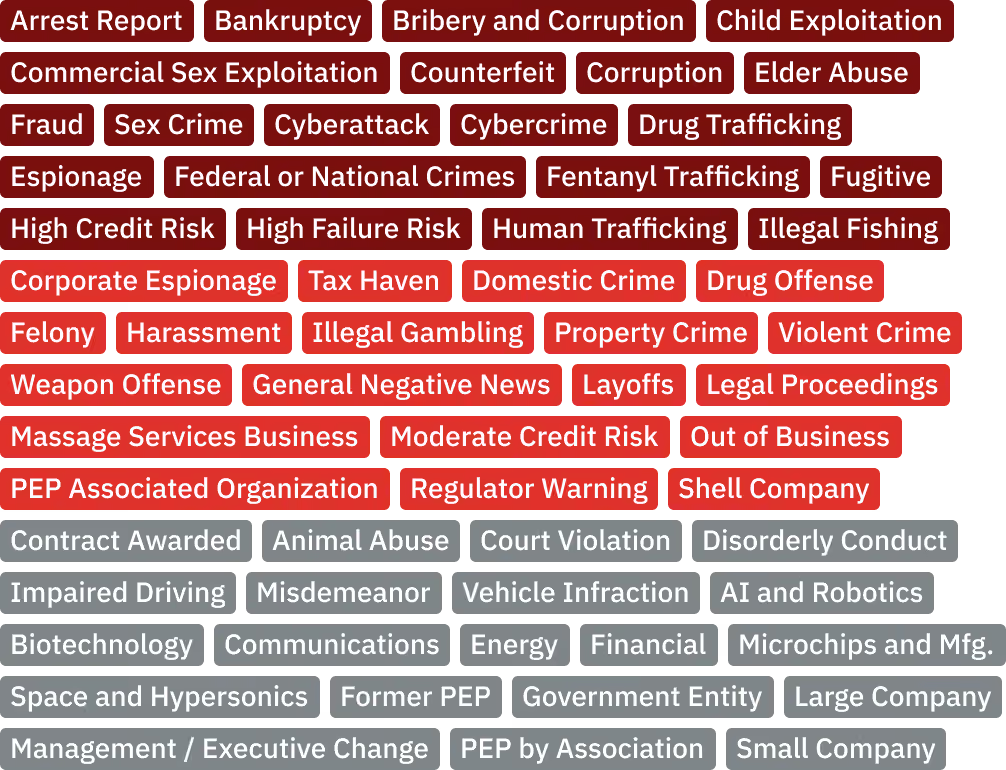
risk levels (High, Medium, Neutral) paired with evidence confidence (Strong, Fair, Weak)
4
policy frameworks behind every risk level: FFIEC, FinCEN, FATF, CFIUS


the problem
Keywords can’t tell a prosecutor from a defendant.
Legacy screening fires whenever a risky word appears near a name, so it can't tell a convicted executive from one who testified against the fraud. Generic AI doesn't fix this: in common commercial embeddings, "AML" sits closest to acute myeloid leukemia, while in Quantifind's adverse-media embeddings it sits closest to anti-money laundering.
the fix
Risk models built for risk, trained on its language and checked for who actually did it.
the building blocks
Six functions, one discipline.
Every risk finding is defined by experts, attributed to the right entity, and backed by its evidence.
Domain-Specific Language Models
Word and sentence embeddings trained on an adverse-media corpus. They score each sentence for how likely it is to be evidence of a specific typology.
Entity Resolution & Attribution
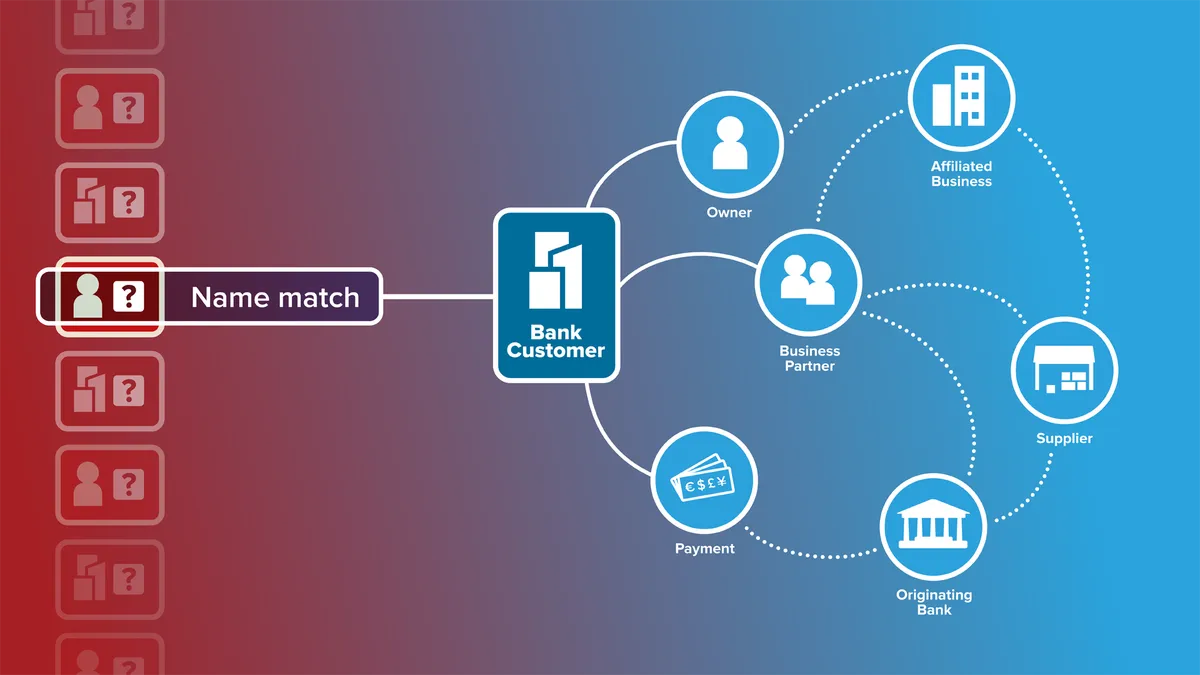
Two checks run before a risk attaches: the searched name must match the entity in the source, and that entity must be the bad actor, not a judge, lawyer, police officer, or witness.
Standardized Risk Taxonomy
A curated catalog of 60+ risk typologies across five domains. Each has a fixed definition, applicable entity types, and a risk level aligned to regulatory guidance.
Models + Authoritative Rules
Deterministic typologies fire on authoritative sources such as sanctions lists, country designations, and official records. Model-based typologies cover everything that depends on context.
Structured & Unstructured Fusion
Adverse media is correlated with corporate registries, ownership and control data, trade relationships, and regulatory actions in a single profile.
Explainable Evidence
Every risk factor shows its risk level, confidence tier, the reasoning behind that confidence, and the source context that triggered it.
How it works
From global data to a defensible risk finding.
Ingest
Global news, corporate registries, trade records, watchlists, and regulatory feeds are collected and pre-filtered at scale.
Resolve
Named-entity recognition and entity resolution link people and organizations in each source to the subject being screened
Score
A vendor list, award file, or public-database pull — batch screened in one job, Deterministic rules fire on authoritative lists. Domain-specific models score news context against each typology's Risk Card definition.monitored daily.
Attribute
Attribution models confirm the subject is the actor in the story. Misattributed and incidental mentions are suppressed.
Deliver
Findings are consolidated with risk level, confidence, and evidence, ready for automated workflows or analyst review.
In the platform
The same typologies, everywhere you screen
Every search, batch run, and monitoring job uses the same standardized risk typologies. Teams can configure which typologies are active to match their risk appetite. Analysts keep the final say: they confirm each finding's accuracy, judge its relevance, and decide what action to take.
Frequently asked questions
Name science, answered.
What is a risk typology, and how does it relate to a risk factor?
A typology is a category of risk, such as money laundering or labor exploitation, defined in a Risk Card. When Graphyte finds evidence of a typology for an entity, it applies the matching standardized risk factor label.
Are all risk typologies model-based?
No. Some are deterministic: appearing on a sanctions list triggers the Sanctions factor, for example. Others depend on context, so language models assess whether an article is relevant to the typology and whether the subject is the one involved.
How do you prevent false positives?
A risk attaches to a name only when two checks pass. The models must find that the name likely refers to the same entity, and that the entity is the bad actor rather than an incidental party like a judge, lawyer, police officer, or witness. Domain-specific language models also avoid the ambiguity of generic embeddings.
How are risk levels determined?
Each typology maps to High, Medium, or Neutral based on guidance including the FFIEC BSA/AML Manual, FinCEN advisories and notices, FATF methods and trends, and CFIUS laws and guidance.
Are findings explainable to regulators and model risk teams?
Yes. Each finding shows its confidence (Strong, Fair, or Weak), why it received that confidence, and the source context behind it. Because every typology has a written Risk Card definition, reviewers can see exactly what the model was trained to detect.
Can we choose which typologies to screen for?
Yes. Teams can configure active typologies to match their risk appetite and program scope.