Sanctions Compliance
Go beyond the match. Understand the full exposure.
Graphyte™ modernizes sanctions compliance with AI-native customer and payment screening, authoritative sanctions list data consolidated into source-traceable entity profiles, and explainable risk intelligence. Reduce unnecessary alert review, uncover direct and indirect sanctions exposure, and keep pace with evolving global sanctions.

95%+
reduction in false positives
90%+
reduction in alert volume
95%+
investigator productivity gain
100%
auditable, explainable decisions


the problem
Similar names create alerts. They don’t establish risk.
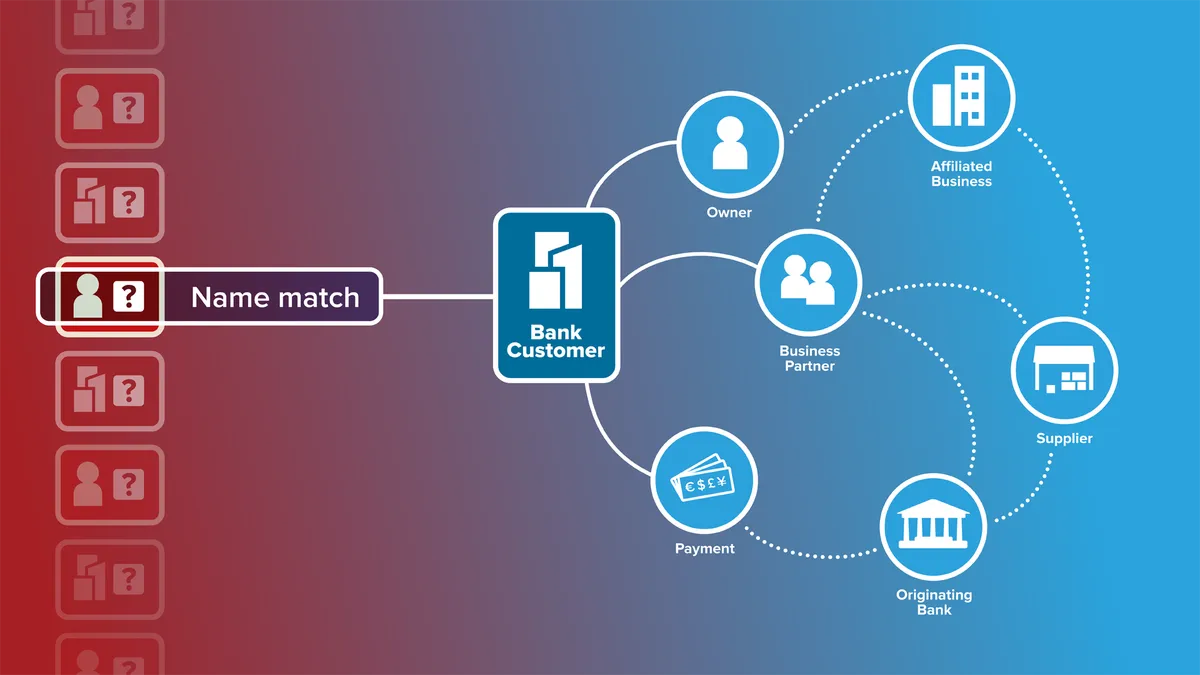
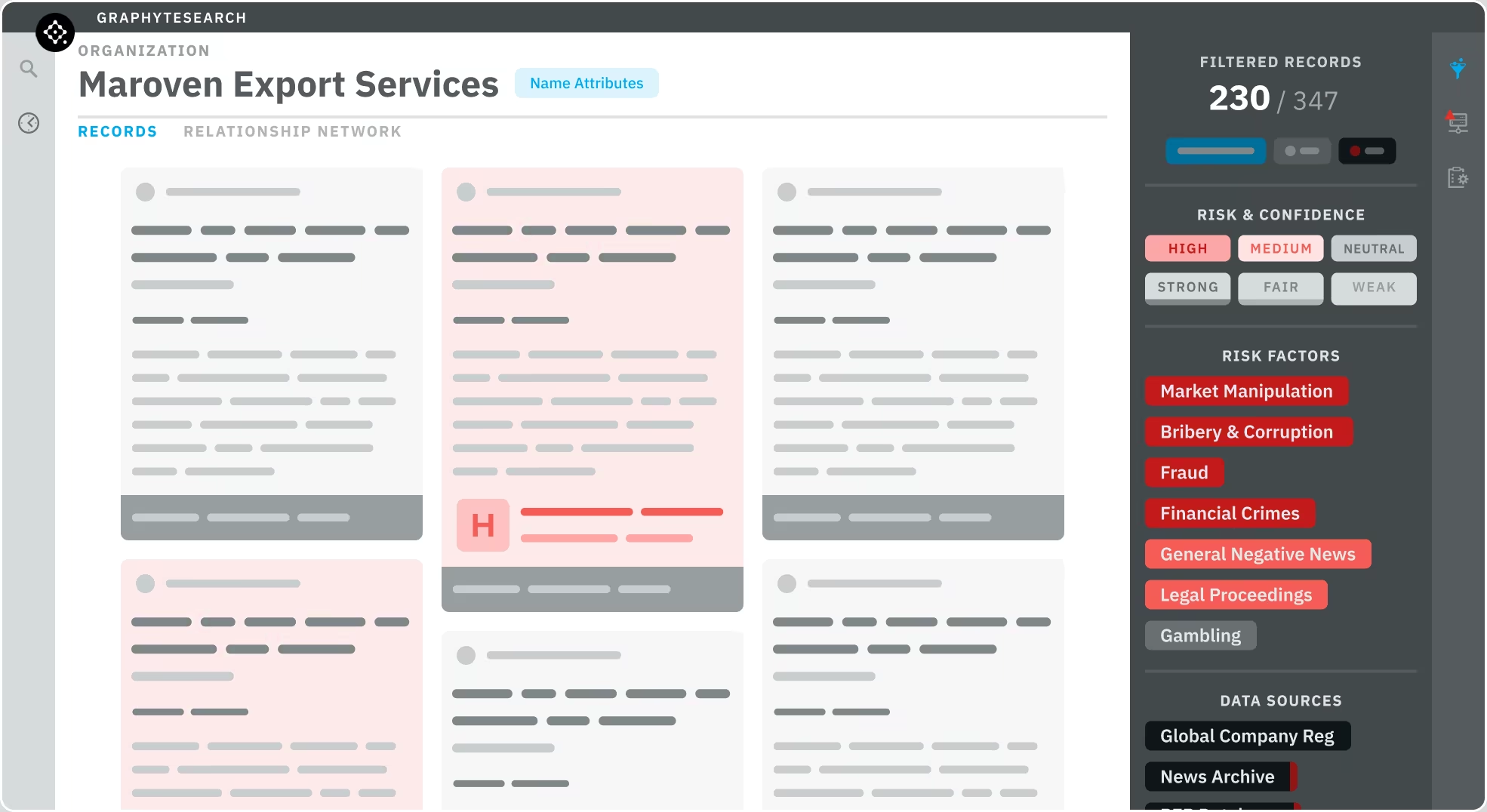
Legacy sanctions screening treats similar names as potential matches, generating high volumes of alerts that teams must investigate. A name match alone may not establish who an entity is or reveal the ownership, control, and other relationships that create sanctions exposure. Teams spend too much time clearing noise and too little time on meaningful risk.
the fix
Redefine what counts as a match.
The Capability Stack
Six connected capabilities. One sanctions compliance workflow.
Customer Screening
Screen customers at onboarding and continuously monitor them as sanctions data changes. Configure lists and match thresholds for different customer cohorts.
Payment Screening
Screen payments in real time using Name Science™, multilingual transliteration, and AI-native entity resolution to identify true risk while keeping legitimate payments moving.
Included Sanctions Data
Access authoritative global sanctions and watchlist data, consolidated into source-traceable entity profiles, with ongoing updates. Configure lists, policies, jurisdictions, and thresholds to fit your program.
Continuous Monitoring
Continuously re-screen customers as sanctions lists and entity information change, surfacing meaningful new exposure without manual re-screening or scheduled reviews.
Network & Ownership Risk
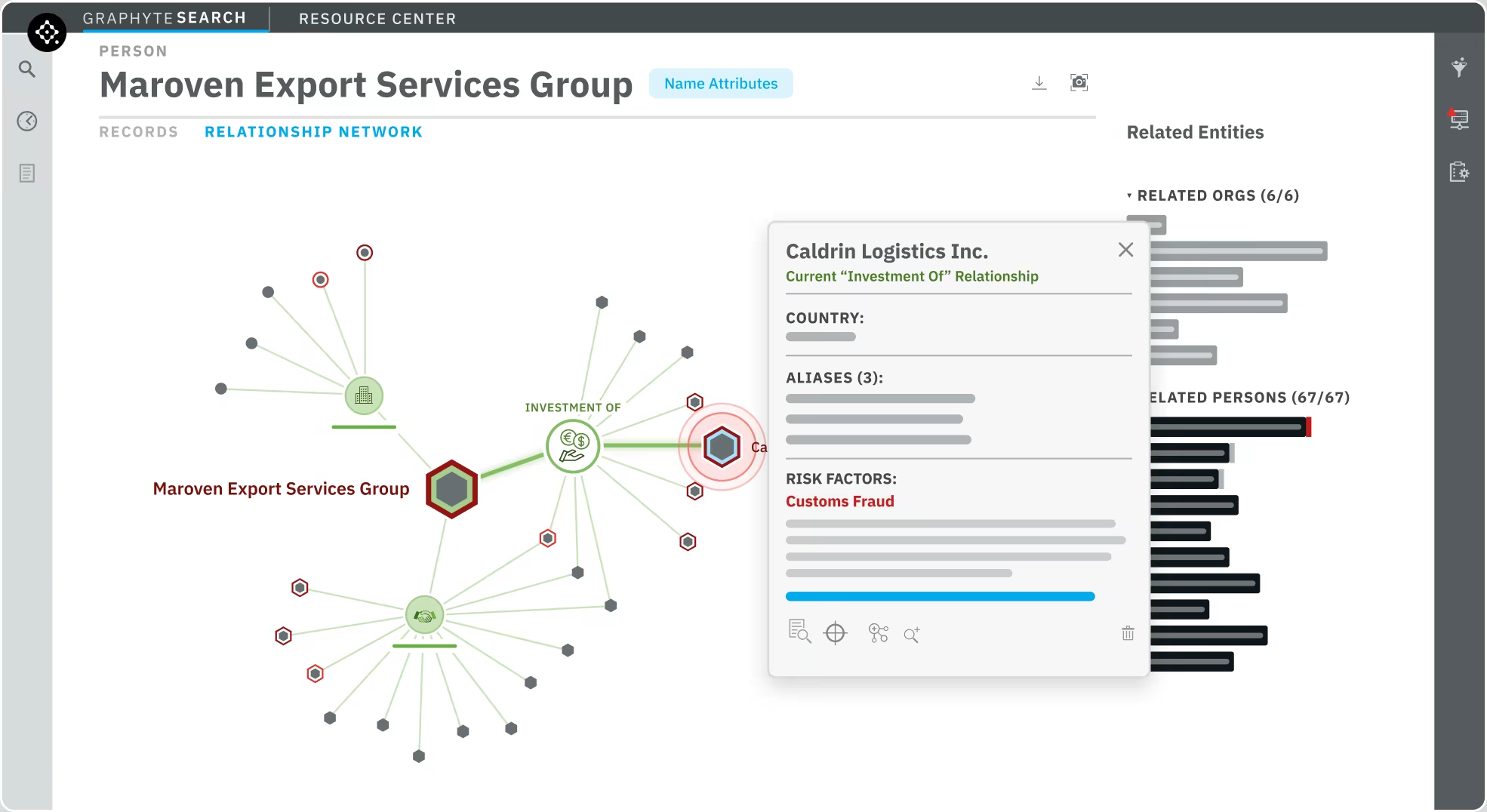
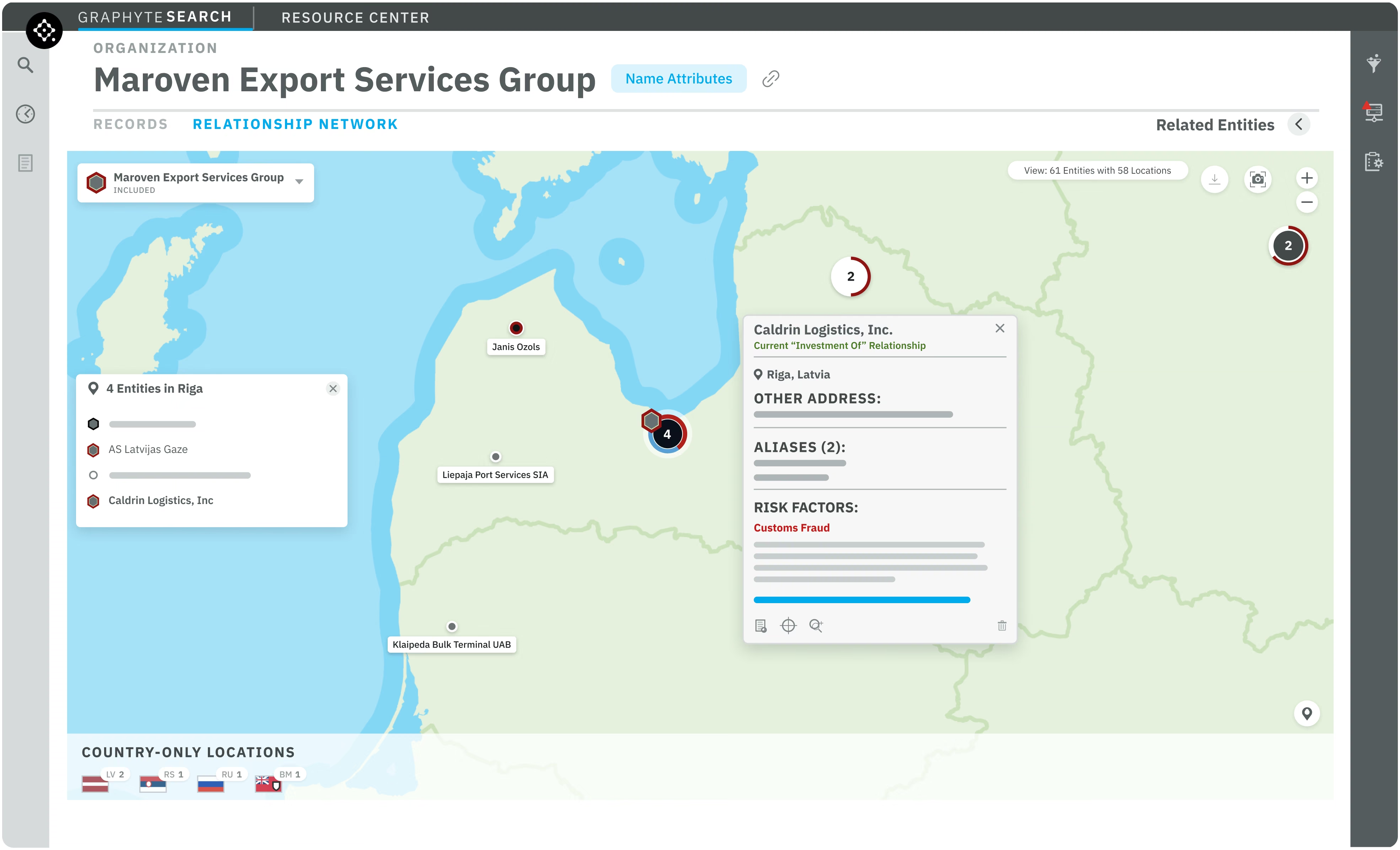
Uncover indirect sanctions exposure through beneficial ownership, corporate hierarchies, intermediaries, and other relationships that simple list matching can miss.
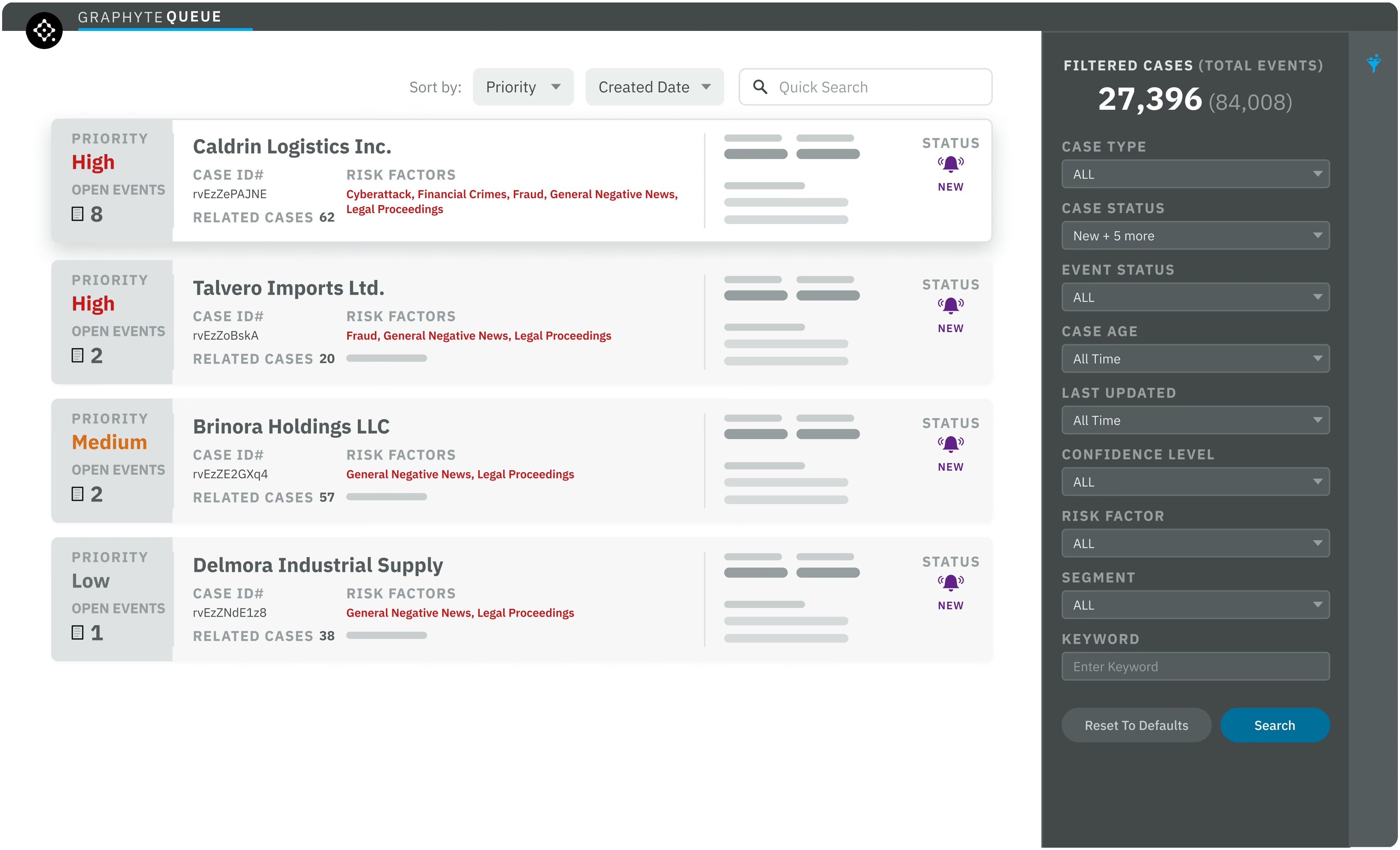
Case Management
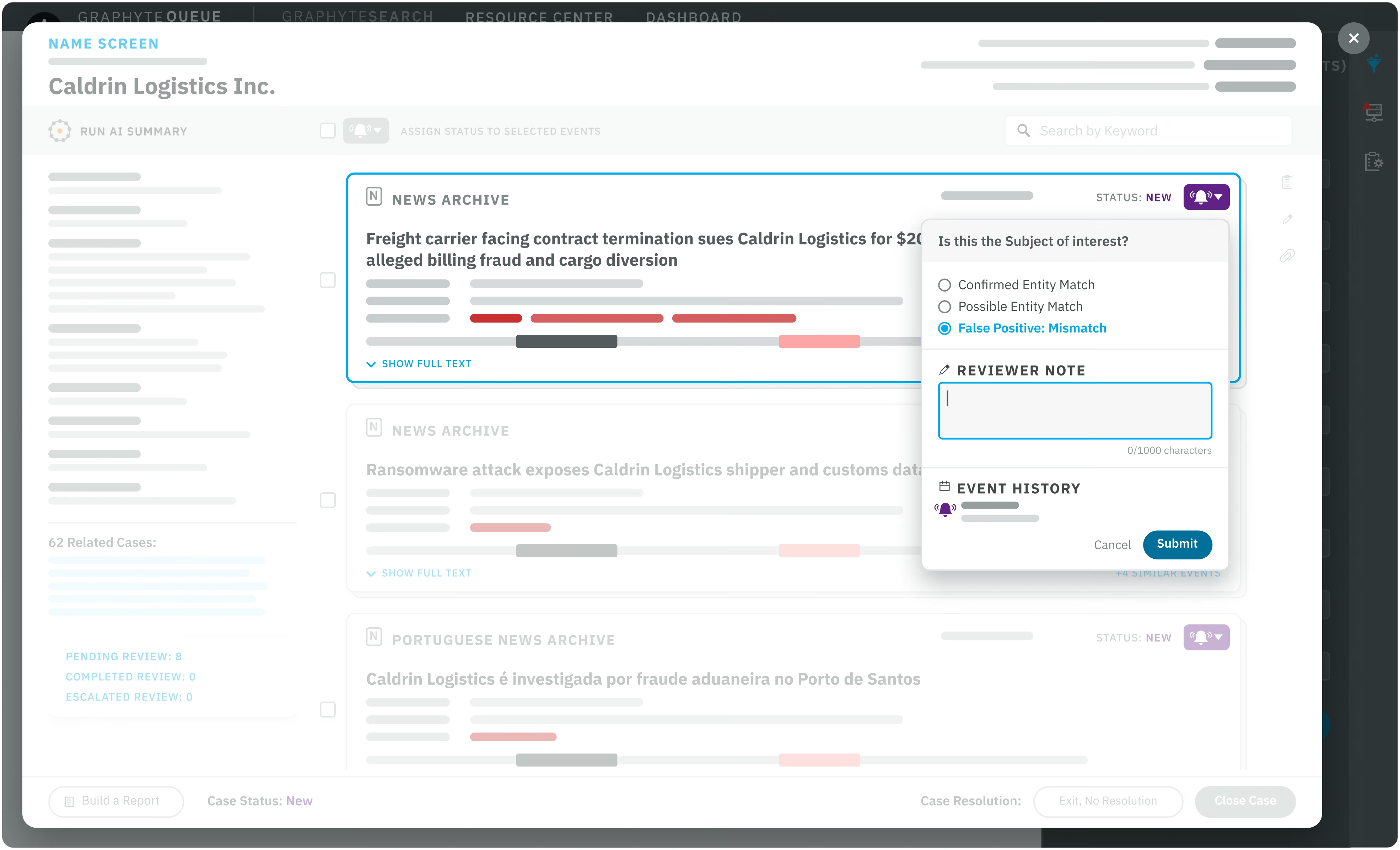
Move sanctions alerts from match through investigation and resolution with Graphyte workflows or your existing case management system, supported by explainable, auditable intelligence.
The Benefits
Find real sanctions risk. Reduce the work around it.
Cut false positives and alert volume
Accurate entity resolution and contextual risk intelligence reduce unnecessary alerts, so compliance teams spend less time clearing false positives and more time investigating sanctions exposure.

Uncover exposure beyond the list match
Reveal ownership, control, and other relationships that connect customers and counterparties to sanctioned entities, including indirect exposure that a name match alone may miss.
Tailor screening to your sanctions program
Configure sanctions lists, screening policies, thresholds, jurisdictions, and risk tolerances to reflect your institution’s regulatory obligations, business model, and risk appetite.
Increase screening capacity without adding equivalent headcount
Apply consistent intelligence and controls across growing customer and payment volumes, helping teams process more alerts with less manual review.

How it works
From sanctions data to explainable screening decisions
Start with Authoritative Sanctions Intelligence
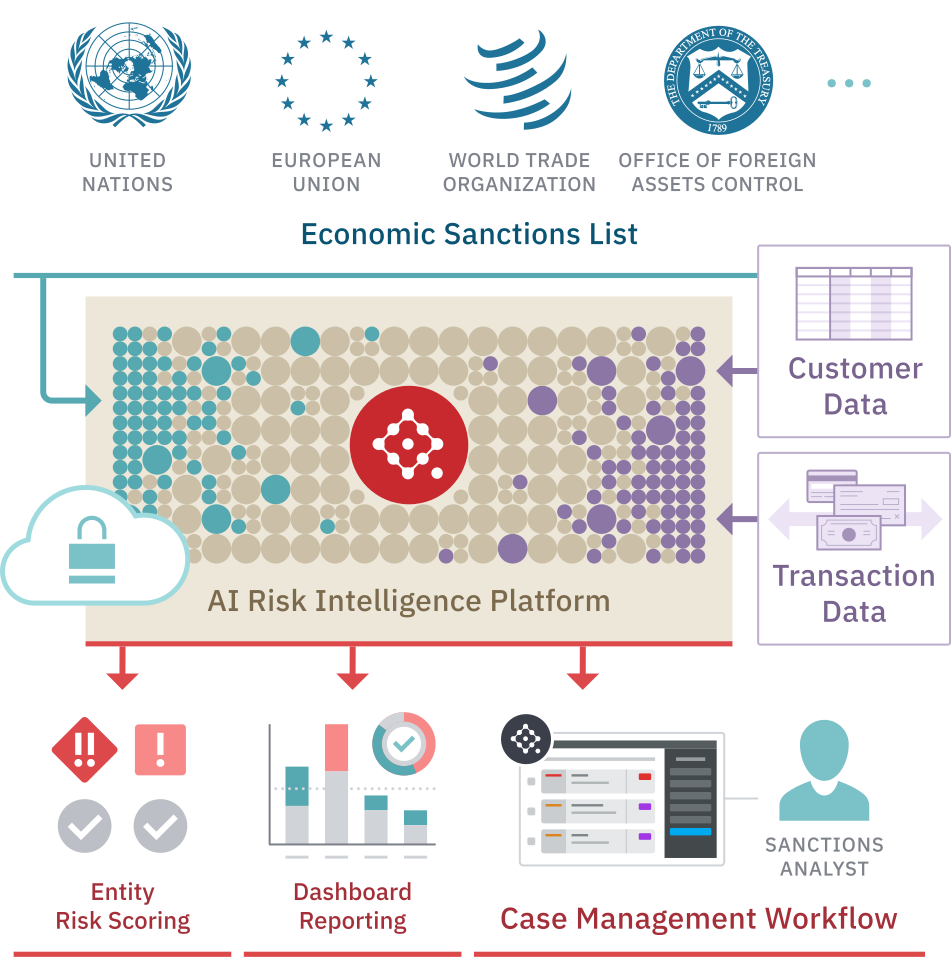
Combine global sanctions and watchlist data with ownership, corporate, and trade intelligence.
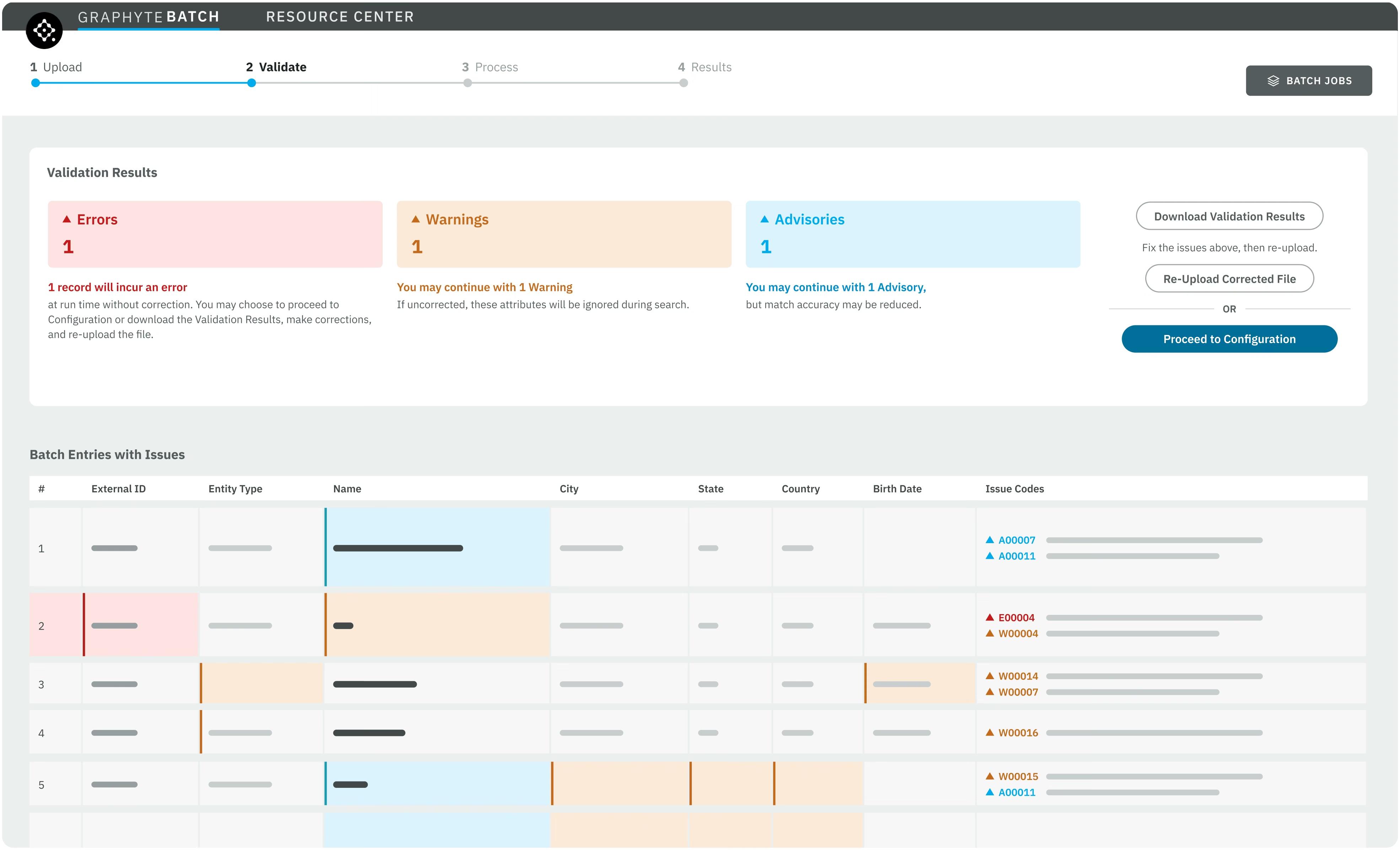
Prepare Customer and Payment Records
Normalize customer and payment data across languages, regions, and character sets for consistent screening.
Identify Direct and Indirect Exposure
Use Name Science™, transliteration, and AI-native entity resolution to identify potential matches, while network intelligence reveals indirect sanctions exposure.
Screen in Real Time and Monitor for Change
Deliver real-time screening results through APIs to support your institution’s payment hold or release decisions, and re-screen records as sanctions data changes.
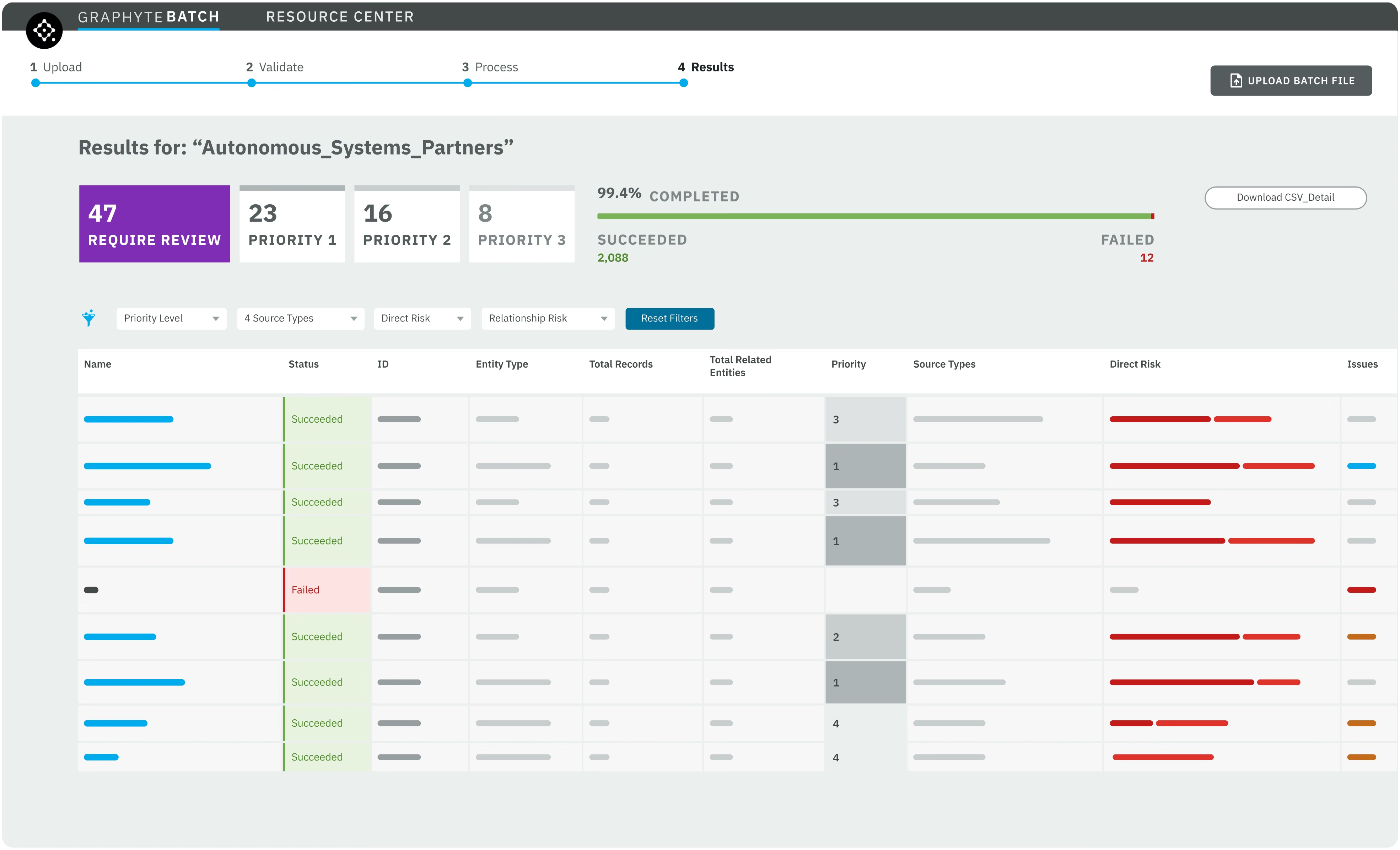
Deliver Evidence for Sanctions Decisions
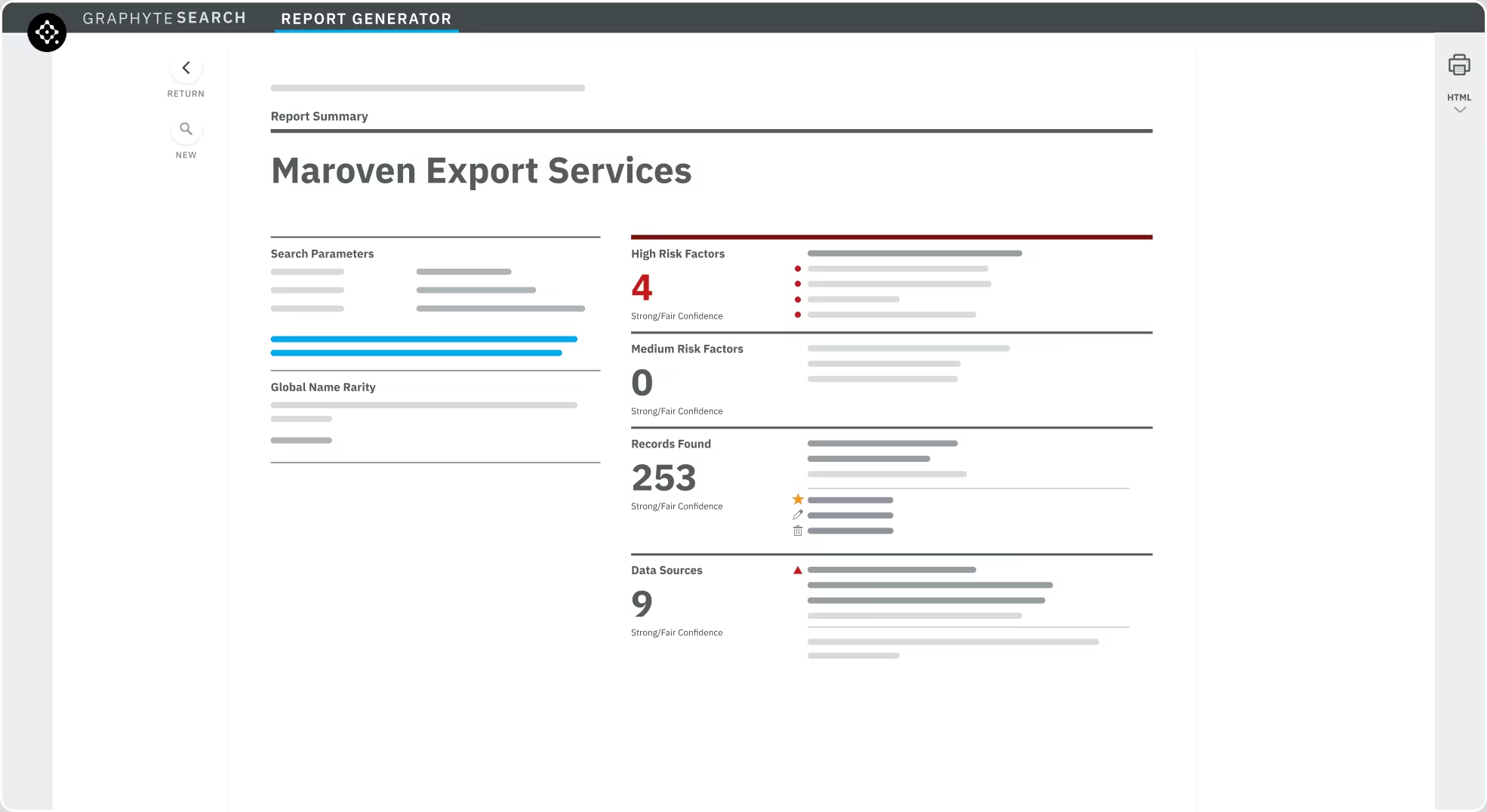
Provide entity risk scores, supporting sources, and explainable findings through reporting and case management workflows to support review and audit.
Put Agentic AI to Work in Sanctions
Quantifind Agents
Expand your team’s capacity with our agent library
Quantifind agents put trusted risk intelligence to work across screening and monitoring workflows. They resolve entities, assess risk, document their findings, and resolve or escalate cases based on your institution’s policies and configured authority—with supporting evidence and human oversight.
“We recognized the need for a robust compliance and risk management solution to protect our customers and maintain the integrity of our payment infrastructure. During our vendor evaluation, it quickly became clear that Quantifind is the most reliable, nimble, and accurate provider.”
Brent Crider · Chief Compliance Officer, MoonPay
Frequently Asked Questions
Sanctions screening software, answered.
What is sanctions screening software?
Sanctions screening software helps financial institutions identify customers, counterparties, payments, and other entities subject to sanctions restrictions. Graphyte combines global sanctions data with Name Science™, multilingual transliteration, AI-driven entity resolution, and network intelligence to reduce false positives and uncover direct and indirect exposure.
How does Graphyte reduce false positives in sanctions screening?
Graphyte goes beyond name similarity. Name Science™ and AI-driven entity resolution assess aliases, transliterations, identifiers, and context to determine whether a sanctions record refers to the entity being screened, reducing irrelevant matches while preserving genuine risk.
How does Graphyte identify sanctions risk beyond a direct list match?
Graphyte combines sanctions data with company, ownership, trade, and network intelligence to identify indirect exposure. It can map affiliates of sanctioned entities and create configurable affiliate lists for screening, revealing risk through ownership, control, intermediaries, and other relationships.
What sanctions lists and data does Graphyte provide?
Graphyte includes authoritative global sanctions and watchlist data with clear source provenance and ongoing updates. Records referring to the same sanctioned entity across multiple lists can be consolidated into a single profile, combining available names, aliases, identifiers, addresses, sanctions programs, and other source attributes while preserving the underlying designations. Institutions can configure the lists and jurisdictions that apply to their sanctions program and incorporate internal watchlists where appropriate.
Does Graphyte support real-time payment screening?
Yes. Graphyte screens payment parties and information against sanctions and compliance lists in real time. Multilingual name matching, configurable thresholds, and suppression logic help identify genuine sanctions exposure while keeping legitimate payments moving.
Can Graphyte identify Travel Rule and payment data compliance issues?
Yes. Graphyte can identify data-quality and compliance gaps such as missing Travel Rule fields and truncated payment records.
How does sanctions list management work?
Graphyte unifies sanctions and watchlist data with ongoing updates and configurable controls. Institutions can align lists, jurisdictions, thresholds, policies, and internal data with their sanctions program while maintaining consistent, auditable screening.
How can AI agents automate sanctions compliance?
Graphyte can route lower-risk alerts, QA samples, and below-the-line samples to Quantifind’s agentic workforce. Agents use sanctions intelligence, entity resolution, network context, and evidence to perform reviews according to defined policies, increasing automation while preserving oversight and auditability.
Does Graphyte integrate with existing sanctions and case management systems?
Yes. Graphyte delivers sanctions risk intelligence through APIs and integrations, allowing institutions to augment existing screening and case management workflows. Teams can also use Graphyte’s purpose-built workflows and agentic capabilities.